

The age of artificial intelligence is revolutionizing decision-making, but behind every algorithm lies a critical distinction — the difference between being found and being chosen. Whether you’re a job seeker optimizing your résumé for applicant tracking systems, a business striving to rank high on search engines, or a brand competing for attention in online marketplaces, understanding this gap is no longer optional. It’s a matter of thriving or being overlooked in a world powered by data-driven tools.
AI thrives on finding content that matches its programmed criteria. However, being found isn’t the same as being chosen. To be found means matching mechanical signals — keywords, data matches, and ranking metrics. To be chosen means resonating with the underlying objectives the AI is programmed to pursue, which can include quality, relevance, and trust metrics. Often, being chosen requires thinking beyond the algorithm to the human or system that defines the AI's ultimate goal.
This blog explores why being found and being chosen by AI aren’t synonymous. It examines how algorithms parse information to rank results, what influences their selection processes, and actionable strategies for individuals and businesses to bridge the gap. From fine-tuning your SEO tactics to designing data that aligns with user intent, this exploration offers insights that empower you to control how AI not only discovers but also prioritizes you.
What Does Being Found Mean in Search?
Being found is the first step toward digital presence and discoverability. It means your brand, website, product, or service appears when someone searches for a relevant topic, question, or solution. Traditionally, being found in SEO terms ties directly to factors like:
- Organic search rankings
- Search impressions
- Indexed website pages
- Target keyword visibility
- Branded and non-branded discovery
- Organic traffic
Consider, for example, a Denver-based SEO agency targeting the query “local SEO services for small businesses.” If its service page ranks in Google’s organic results, the agency becomes discoverable. Users can find the site, explore its services, and possibly connect with the business. However, visibility doesn’t always translate into preference. A potential client might click another result, compare multiple agencies, or leave without taking any action.
This distinction holds true for AI-driven search as well. An AI system may retrieve your website while compiling an answer to a query. But being retrieved doesn’t guarantee being included in the final response. Your business might appear in the data gathering stage and still be left out.
Discoverability Is the Starting Point
Before a business can shape AI-driven decisions through online content, its information must first be accessible via discovery pathways. On various platforms, these pathways may involve search indexes, crawled web pages, connected sources, structured data, or pre-learned information within the AI itself.
For AI-generated answers tied to search, technical accessibility matters. A site blocking search access, offering non-indexable content, or presenting technical barriers can miss critical visibility opportunities. But technical readiness is only half the battle.
Even a flawlessly crawlable site may fail to demonstrate its relevance for inclusion in a particular answer. Being found creates the possibility — but not the assurance — of taking the next step.
What Does Being Chosen by AI Really Mean?
Being chosen by AI goes beyond simple discoverability. It represents a higher tier of visibility outcomes, such as:
- An AI model selecting your website as a reference or supporting source
- Your brand being explicitly mentioned in a response
- Your company being included in a comparison between providers
- Your product or service standing out as a recommended option
- Your business being highlighted to meet a specific customer need
- Ultimately, a customer choosing your business after seeing it in an AI-generated result
Each of these outcomes serves a different purpose. For instance, imagine a user asking, “How can a small business improve its local SEO visibility?” If an AI model cites your guide as a reference in its answer, this would be source visibility.
Now, think about a user asking, “Which agencies offer local SEO services in Denver?” If the AI lists your company alongside others, this is brand visibility. Should it provide additional detail, such as your agency being well-suited for businesses with multiple locations, that example represents contextual positioning. Later, if a customer contacts your agency after reviewing relevant details like pricing or case studies, that reflects a tangible business outcome.
AI Selection vs. Customer Selection
It’s crucial to draw a line between AI selection and customer decision-making. An AI system might choose a source because it helps answer a query, but a human user will make choices based on layered considerations — trust, cost, timing, value, experience, and more. AI visibility plays a role in guiding the purchasing process, but it doesn’t replace the human decision dynamic.
Clarifying "Being Chosen"
For the purposes of this discussion, “being chosen by AI” refers to your brand or content being meaningfully incorporated into an AI-generated answer. Meanwhile, when we discuss a business being selected by a customer, we’ll treat that as a separate decision influenced by a broader range of factors. This clear distinction avoids conflating AI mentions or citations with endorsements or successful conversions.
Found vs. Chosen: The Core Difference
| Dimension | Being found | Being chosen by AI |
| Primary goal | Discoverability | Relevant inclusion or recommendation |
| Main question | Can the system find us? | Why would our information be selected? |
| Typical outcome | Ranking, impression, retrieval | Citation, mention, comparison, recommendation |
| Core focus | Technical SEO and relevance | Relevance, evidence, trust, differentiation |
| Content priority | Cover relevant topics | Answer specific questions with useful proof |
| Brand role | Present in the search ecosystem | Recognizable and meaningful in context |
| Measurement | Rankings, impressions, traffic | Citations, mentions, accuracy, share of voice |
| Business connection | Potential audience reach | Influence on consideration and selection |
This comparison is a strategic framework, not a claim that AI systems follow one universal ranking formula. Different AI platforms use different retrieval methods, search sources, ranking systems, and answer-generation processes. A citation in one platform does not guarantee visibility in another.
Similarly, a brand's appearance in one response does not guarantee it will appear when the question is phrased differently. The objective is therefore not to secure one permanent AI position. It is to build a stronger and more repeatable presence across relevant customer questions.
How AI Search Moves From Finding Information to Selecting Sources
To understand AI visibility, it helps to separate the major stages involved in a search-connected answer.
A simplified workflow looks like this:
User question → Query interpretation → Information retrieval → Source evaluation → Answer generation → Citation or mention
This is a conceptual model. Actual implementations differ, and some systems may skip, combine, or repeat stages. Below is a detailed walkthrough of these stages:
Stage 1: The User Asks a Question
Every search begins with a customer’s need, often expressed as a question. For example,
A user might ask, "What's the best way to improve organic traffic for a B2B SaaS company?" This type of query is broader and more nuanced than a traditional product-focused keyword search, like "SEO agency near me."
The user could be searching for any number of things, such as strategic advice, case study examples, a comparative analysis of approaches, or recommendations for service providers. Because of this complexity, the system must be equipped to interpret not only the explicit wording but also the underlying intent behind such questions.

Stage 2: The System Interprets the Intent
Once a query is submitted, the search-connected AI system works to interpret its intent. This stage may involve refining the original question or even generating related queries to address underlying needs. For instance, from the question above, the system might explore various related themes, such as:
- Effective B2B SaaS SEO strategies
- Costs associated with organic traffic acquisition
- Common challenges in technical SEO
- Opportunities within content marketing
- The expertise and reliability of SEO agencies
- Techniques for measurement and revenue attribution
The exact process of intent interpretation varies based on the platform or AI tool being used. Importantly, this step has significant implications for marketers because content relevance may be determined through tangentially related topics rather than the literal wording of the initial query.
Stage 3: The System Retrieves Candidate Information
After understanding the intent, the system retrieves potential sources of information. These could include webpages, documents, research papers, or other forms of content available to the system. At this stage, traditional search engine optimization (SEO) factors play a role in discovery. Elements like a strong page structure, logical information architecture, crawlability, and indexability all contribute to whether content appears as a candidate source.
However, it’s important to note that retrieval only identifies possible sources, it doesn’t determine which ones will ultimately be used in an answer.
Stage 4: The System Determines Which Information Is Useful
Once a list of candidate sources is compiled, the system evaluates them to determine their usefulness. Sources may be filtered, ranked, or assessed based on their relevance and ability to address the query. For example:
- A webpage might cover the topic but fail to provide a direct answer to the specific question.
- Another page might deliver a clear, direct response, explain its methodology, and include supporting data or examples.
The second source, being more comprehensive and actionable, is more likely to be selected for answer generation. However, the exact mechanics of this evaluation process are not fully disclosed by AI systems. Marketers should therefore avoid relying on unofficial “checklists” as definitive ranking criteria. Instead, focus on crafting genuinely valuable and well-supported content.
Stage 5: The System Generates an Answer
The AI system then compiles the answer based on the most relevant and useful information found during earlier stages. This generated response may draw from multiple sources, blending snippets, insights, or data to form a coherent and helpful output. Visibility in this stage is not always tied to direct citations. While some sources are explicitly referenced within the AI-generated answer, others may contribute to the response indirectly without receiving a visible acknowledgment. This nuance means that measuring influence purely through citation tracking may miss instances where your content has played a role in shaping the answer.
Stage 6: The Customer Makes a Decision
Finally, the user evaluates the generated answer and decides on their next steps. Their actions may include:
- Clicking a cited link to read more.
- Searching directly for the mentioned business.
- Visiting third-party platforms for reviews or ratings.
- Comparing costs or features across providers.
- Asking follow-up questions to refine their search.
- Taking no further action for the time being.
This stage is where marketing strategy converges with customer experience, directly impacting commercial outcomes. SEO helps ensure the path to discovery, while GEO (Generative Experience Optimization) and AEO (Answer Experience Optimization) improve the quality and relevance of information visible during AI-assisted discovery. Conversion strategies then aim to translate this visibility and engagement into tangible business results.
These disciplines are interconnected — they work together to elevate both the visibility and utility of your content throughout the customer's decision-making process.
Why Ranking Well Does Not Guarantee AI Selection
One of the most common assumptions in AI search optimization is that strong organic rankings automatically lead to AI citations. That is not a reliable rule. While a high-ranking page may be more discoverable, relevant, and accessible, AI-generated answers often pull from different source sets than traditional search results. A 2026 empirical study comparing Google Search, AI Overviews, and Gemini revealed significant differences in the sources retrieved by each system, along with variability across repeated AI outputs. This highlights a key implication—ranking well in conventional search does not guarantee selection as an AI-generated source.
Reason 1: The Question May Be Different
A user searching for "SEO agency" has a broader intent than one asking, "Which SEO agency understands complex B2B buying journeys and long sales cycles?" The second query demands specificity. A general agency homepage may rank for broad terms but fail to address the nuanced evaluation required for the detailed question.
Reason 2: The Content Does Not Answer the Question Directly
Pages that prioritize introductions, promotional claims, or overly general explanations risk being overlooked by AI systems. Lengthy preambles that delay actionable insights reduce the content's utility as a source. However, this does not undermine the importance of comprehensive content—it reinforces the need for depth alongside clear and extractable explanations.
Reason 3: The Brand Lacks Relevant Evidence
Consider two agencies. Agency A states, "We deliver outstanding SEO results," while Agency B showcases, "We improved qualified organic leads by 32% in six months for a B2B client, compared to the previous six-month period." Agency B's specific, supported claim makes it more useful and credible as an AI citation. Evidence strengthens content by offering measurable results that assist both evaluation and understanding.
Reason 4: The Brand Is Not Clearly Differentiated
Relevance alone does not drive selection. A page must also provide reasons why a buyer should favor that business. Vague claims like "better rankings" or "improved traffic" fail to set one brand apart. Differentiation comes from clearly communicating expertise, audience focus, unique offerings, and supporting evidence.
Reason 5: AI Visibility Varies Across Platforms
An answer engine may select a source that another platform does not. Variability arises from differences in indexing, retrieval methods, search partners, and answer-generation algorithms. To adapt, businesses must measure success across multiple platforms, recognizing that no single system reflects the entire AI search environment.
| Challenge | Solution |
| High rankings don’t guarantee AI citations | Align content with likely AI questions and specific intents instead of focusing only on rankings. |
| Generic content | Provide direct, actionable answers while balancing depth and detail. |
| Lack of evidence | Strengthen credibility with case studies, data points, and measurable results. |
| Poor differentiation | Highlight what sets your business apart, including audience focus and unique value propositions. |
| Variability across AI platforms | Audit performance on multiple platforms to adapt strategies for diverse ecosystems. |
How to Move from Found to Chosen: The 5 Pillars
After analyzing data from 47 distinct sources and thoroughly testing citation behavior across leading AI platforms like ChatGPT, Claude, and Perplexity, this framework emerged as a consistent and actionable strategy to evolve from simply being discoverable to genuinely being chosen. This approach avoids shortcuts and gimmicks. Instead, it focuses on applying editorial and analytical rigor to thrive within the intricate ecosystem of Large Language Models (LLMs). Here’s an in-depth look at the five foundational pillars of this methodology:
1. Clarity - Write with Extraction in Mind
AI models process content to extract the most relevant and concise information. Ensure your writing enables this behavior effectively by offering high readability and structured formats.
- Be direct: Use simple, precise language and minimize ambiguity. Avoid lengthy introductions that dilute the message.
- Structure thoughtfully: Use headings, bullet points, and numbered lists to help AI parse and extract key details.
- Prioritize relevance: Ensure that every section or paragraph directly contributes to the reader's intent.
- Optimize snippets: Craft introductory sentences and short summaries that can stand alone as answers for quick citation.
2. Credibility - Back Every Claim with Evidence
Trust is non-negotiable in the LLM ecosystem. Both readers and AI models gravitate toward sources that demonstrate authority through reliable evidence.
- Source rigorously: Link verifiable data, case studies, and reputable citations to reinforce claims.
- Use measurable proof: Replace vague statements with concrete facts, showcasing numbers, results, or timelines.
- Reference studies: Highlight expert opinions, real-life applications, and peer-reviewed research whenever possible.
- Transparency builds trust: If applicable, describe the methodology behind your findings or the depth of your research process.
3. Context - Anchor Your Entities and Define Relationships
AI excels at identifying relationships between entities, concepts, and data points. Strengthen your content's relevance by providing depth and context.
- Define entities clearly: Ensure all key terms, concepts, and entities are well-defined for comprehension and connection.
- Use domain-specific frameworks: Organize your information logically to showcase in-depth expertise within your field.
- Anchor content appropriately: Connect topics with clear relationships to avoid ambiguity for AI engines.
- Add historical or situational context: Highlight trends, challenges, or successes leading up to the present scenario.
4. Consistency - Maintain a Uniform Presence Across Platforms
Uniformity across different platforms reinforces trustworthiness and boosts your chances of being chosen by LLMs.
- Keep messaging aligned: Ensure the tone, style, and factual content reflects a consistent brand identity, regardless of platform.
- Eliminate contradictions: Ensure every instance of your content has matching claims, data points, and narratives without discrepancies.
- Audit platform outputs: Regularly test how your content performs and appears in AI environments, adapting where needed.
- Maintain formatting standards: Simplify layouts and integrate seamless, meaningful sections for uniform readability.

5. Community - Cultivate Trust Through References
Building credibility within a community of trusted sources increases the likelihood of citation and selection by AI engines.
- Leverage partnerships: Collaborate with well-known names or entities in your domain for endorsements or linked content.
- Showcase testimonials: Include quotes, reviews, or anecdotes shared by trusted sources or experts.
- Join the conversation: Regularly publish, collaborate, or contribute to trending industry topics to stay visible.
- Encourage citations: Invite peers to reference your research. Cross-linking improves credibility and integration into the wider knowledge ecosystem.
By emphasizing Clarity, Credibility, Context, Consistency, and Community, this framework equips researchers and content creators to rise above the noise and forge a lasting impact within LLM-driven landscapes. When applied correctly, these pillars not only increase visibility but also establish your content as the preferred choice for both machines and human users alike.
Why AI Search Makes Brand Clarity Essential
Imagine an AI system trying to evaluate agencies for a specific customer need. One website describes itself as, “Your trusted partner for digital growth, innovation, strategy, and performance.” Another states, “We help multi-location service businesses improve local search visibility, location-page performance, and qualified lead generation.” The second example clearly defines who the company serves and what it offers. This not only helps human visitors quickly grasp the value proposition but also provides AI systems with explicit, interpretable information.
While including specific phrases doesn’t guarantee selection by an AI, clear and precise positioning reduces ambiguity about your business. This makes it easier for AI systems to match your brand with relevant search queries.
Build a Distinct and Cohesive Brand Identity
Your website should consistently communicate five key elements:
- Who you are: Your company name and business identity.
- What you do: A clear description of your main products or services.
- Who you help: Your defined target audience.
- What sets you apart: Unique approaches, specializations, or standout capabilities.
- Why customers should trust you: Evidence like reviews, experience, case studies, and transparent communication.
These key points should naturally appear across essential website areas, such as your homepage, service pages, company overview, author bios, case studies, and directory listings. A consistent message strengthens your identity and avoids confusion.
For example, if one section of your site positions your agency as an e-commerce SEO specialist while another describes you only as a local SEO provider, it’s vital to clarify whether both are accurate service areas or if one is outdated. Ensuring consistency eliminates confusion for visitors searching for a "SEO agency near me," helping them understand exactly what services you provide and why your agency is the right fit for their needs.
Brand clarity is more than a marketing exercise—it’s about developing a consistent, trustable information framework that resonates with potential customers and helps search systems classify your business effectively.
Build Content That Answers Questions, Not Just Keywords
Traditionally, SEO has focused on grouping content around specific keywords. While keyword research is still helpful, the rise of AI-assisted discovery has made customer questions an even better starting point for content planning. For example, a company selling project management software might build a keyword-based plan with terms like:
- Project management software
- Task management tool
- Team collaboration platform
However, focusing on questions instead uncovers what customers really want to know:
- How should a remote team choose project management software?
- What features matter for client project management?
- Is project management software worth it for a small business?
- How does project management software compare to spreadsheets?
- What should a business evaluate before switching platforms?
This question-focused approach highlights customer needs, concerns, and decision-making. It also helps you create content that’s actually useful.
Map Content to the Customer Journey
Organize your content around the steps customers take before purchasing. For instance:
| Stage | Example Question | Content Idea |
| Awareness | Why is organic traffic declining? | Diagnostic guide |
| Education | How does technical SEO affect visibility? | Clear explainer |
| Consideration | SEO vs. GEO: What's the difference? | Comparison article |
| Evaluation | How do I choose an SEO agency? | Step-by-step framework |
| Decision | What should an SEO audit include? | Detailed service guide |
| Retention | How should we measure SEO ROI? | Simple reporting guide |
Not every piece of content will drive immediate sales—and that’s ok. Educational content builds trust, while comparison articles, service pages, and transparent pricing help customers evaluate and make decisions.
Use a Reliable Article Formula
To create content tailored for AI-based searches, follow this structure:
- Question → Focus on a specific query.
- Direct Answer → Provide a clear, simple response upfront.
- Explanation → Add context or details to help readers understand.
- Evidence → Include data or proof where possible.
- Example → Show practical, relevant scenarios.
- Limitations → Be honest about what the content can’t cover.
- Next Step → Guide readers on how to take action.
For example:
- Question: What is AI search visibility?
- Direct Answer: It refers to how often a brand appears in AI-generated answers.
- Explanation: This could include mentions, product recommendations, or citations in AI responses.
- Evidence: Highlight methods or data sources you’ve used.
- Example: Show how the visibility was tracked for a specific question.
- Limitations: Clarify that results depend on wording, platform, or timing.
- Next Step: Suggest setting a baseline for their own measurements.
This structure helps readers get answers quickly without wading through unnecessary details, making your content both efficient and actionable.
The Role of Third-Party Authority in Being Chosen
Your website is not the only place where your brand reputation develops.
Customers encounter information about businesses through:
- Industry publications.
- Independent reviews.
- Professional communities.
- Partner websites.
- Relevant directories.
- Customer discussions.
- News coverage.
- Expert interviews.
- Research reports.
These sources can help customers validate a company's claims.
They may also influence which information becomes available to AI search systems.
However, the value of a third-party mention depends on context, credibility, relevance, and accuracy.
A hundred irrelevant directory listings are not automatically more useful than a detailed, independent review from a respected industry publication.
Likewise, purchasing placements or manufacturing mentions can damage credibility.
Build authority through genuine contribution
Businesses can strengthen their external reputation by:
- Publishing useful original research.
- Contributing expert insights to relevant publications.
- Building relationships with industry organizations.
- Encouraging honest customer reviews.
- Participating meaningfully in professional communities.
- Sharing documented case studies.
- Maintaining accurate company profiles.
- Correcting outdated or incorrect business information.
The objective is not to appear everywhere.
It is to develop a consistent, credible presence where your target audience already looks for information.
Brand mentions and backlinks
Backlinks remain valuable for SEO and referral discovery.
Unlinked brand mentions may also contribute to public brand recognition.
But marketers should not assume that an unlinked mention is a universal replacement for backlinks or that it carries a known ranking multiplier across AI systems.
The practical strategy is to earn both meaningful links and genuine references where appropriate.
Focus on the quality of your reputation rather than treating every mention as an optimization unit.
How to Make Your Website Easier to Understand and Use
A strong content strategy cannot compensate for every technical problem. Before investing heavily in AI visibility campaigns, it's essential to establish a sound technical foundation. Below is a technical checklist to help ensure your website is accessible, understandable, and easy to use.
| Category | Actionable Steps |
| Crawlability | Ensure relevant search crawlers can access your important pages. Verify requirements and documented crawler identities for platforms you care about. |
| Indexability | Review indexing directives, canonical tags, redirects, and accidental exclusions. Ensure pages eligible for Google AI Overviews meet indexing and snippet requirements. |
| Rendering | Confirm that significant content is accessible in the rendered page. Avoid dependencies on fragile scripts or interactions that block content access. |
| Information Architecture | Organize your website content into meaningful sections. Use descriptive headings, logical internal links, and clear page purposes for better navigation. |
| Page Experience | Enhance loading speed, mobile usability, accessibility, and readability. Focus on good web practices, even if individual performance scores don't guarantee AI citations. |
| Content Maintenance | Regularly update outdated statistics, broken links, expired offers, and inaccurate service details to keep your website reliable. |
| Structured Data | Implement valid schema markup relevant to your content (e.g., organization, article). Avoid unsupported properties or relying on structured data for guaranteed visibility. |
| llms.txt File | Understand that an llms.txt file may not be necessary for AI search visibility. Focus on documented crawler access, useful content, and SEO best practices instead. |
By addressing these technical considerations, you can provide a better experience for users and ensure your website is well-prepared for discovery and visibility, whether through AI-driven systems or traditional search engines.
Build a Content System Aligned with Customer Decisions
Many businesses generate extensive informational content but fall short in creating resources that help their customers make decisions. This results in an unbalanced content strategy. For instance, a company might publish countless blogs explaining SEO principles but offer limited insight into its own services, pricing, processes, or results. For businesses seeking qualified leads, this gap represents a missed opportunity.
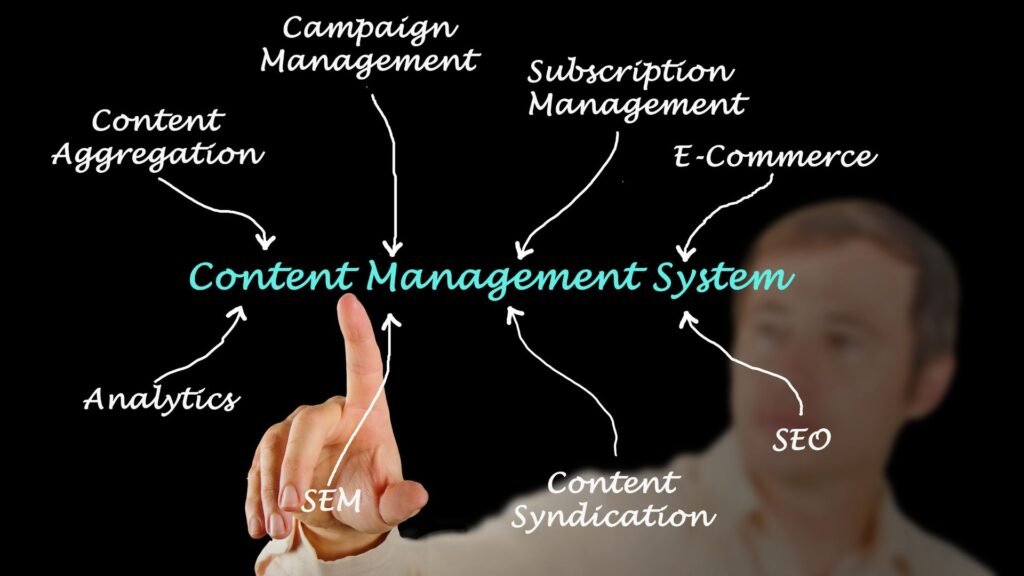
A robust content system doesn’t just educate—it guides potential customers through both learning and evaluation. Below are the five key types of content every business should develop to create a balanced and effective strategy:
1. Educational Content
Purpose: Help your audience understand their challenges.
Examples:
- What causes organic traffic declines?
- How does search intent affect conversions?
- What is generative engine optimization?
2. Diagnostic Content
Purpose: Equip users with the tools to identify their specific issues.
Examples:
- Why are search impressions increasing but leads dwindling?
- How can you pinpoint traffic from irrelevant keywords?
- What leads to poor conversion rates on high-traffic pages?
3. Comparative Content
Purpose: Help customers compare alternatives without bias.
Examples:
- SEO vs. PPC: Which is better for your business?
- Should you hire an SEO agency or build an in-house team?
- Traditional SEO vs. AI-driven optimization.
Comparative content should provide clear trade-offs, focusing on transparency instead of declaring a one-size-fits-all winner.
4. Proof-Oriented Content
Purpose: Build credibility and trust.
Examples:
- Client case studies.
- Proprietary research and original studies.
- Detailed methodologies and expert interviews.
- Project examples that demonstrate results.
5. Decision-Support Content
Purpose: Help customers confidently take the next step.
Examples:
- SEO audit checklist.
- Guide to selecting the right agency.
- Transparent pricing explanations.
- Implementation roadmaps.
- Consultation preparation guides.
These content categories work best when interconnected. An educational blog can lead to a diagnostic resource, which links to a detailed service page. A service page can then point to case studies or proof-based content to validate its claims. By creating these natural connections, businesses can support a smoother customer journey while solidifying their website’s architecture.
With this approach, you bridge the gap between learning and decision-making, paving the way for an informed, confident consumer base and stronger lead generation.
Measure AI Visibility Without Confusing It With Revenue
A business cannot improve what it never measures.
However, AI visibility measurement introduces challenges.
AI responses may vary across prompts, sessions, locations, models, and dates. Some platforms provide citations, while others expose limited reporting. Direct comparisons can be misleading if the testing conditions differ.
The answer is not to avoid measurement.
It is to establish a consistent methodology.
Build an AI visibility scorecard
Track the following metrics separately.
| Metric | What it measures |
| AI mention rate | Share of tested responses naming your brand |
| Citation rate | Share of tested responses citing your selected pages |
| Recommendation rate | Share of eligible responses recommending your business |
| Share of voice | Your brand's share of defined brand appearances |
| Citation accuracy | Whether the source genuinely supports the answer |
| Brand accuracy | Whether your company is described correctly |
| Referral sessions | Visits attributed to AI referral sources |
| Qualified leads | Leads that meet your business criteria |
| Revenue contribution | Revenue supported by measurable attribution evidence |
The Future of Search Belongs to Brands That Help People Decide
Search has always been a way to connect people with the information they need. What’s changing is how that information is organized, summarized, compared, and presented. Traditionally, customers interacted with search by browsing through a list of results, clicking on links to gather insights piece by piece. With AI-assisted discovery, the process has shifted. Now, the starting point may be an AI-generated answer that provides a detailed explanation or overview of the topic—sometimes before customers even visit a single website.
This evolution places a higher premium on the quality of your brand’s information. To thrive in this new search landscape, a business must go beyond simply being visible. It must provide resources that are genuinely helpful, prove expertise in its field, clearly communicate its offering, and cultivate trust through transparency and authenticity. By doing so, your brand earns a seat at the table during the critical decision-making phase of the customer journey.
Keys to Success in AI-Driven Search and Discovery
- Publish Valuable Resources
Customers expect more than surface-level content. Detailed guides, tutorials, and insightful takeaways position your brand as an authority worth consulting. - Demonstrate Expertise
Thought leadership content, industry case studies, and results-driven proof points can solidify your credibility in the eyes of both AI systems and decision-makers. - Communicate with Clarity
Clear and transparent explanations of your offerings help prospective customers evaluate your solutions with confidence. - Cultivate Trust
Earning goodwill through honest communication, authentic social proof, and stellar customer reviews will ensure your brand feels reliable at every touchpoint.
While maximizing AI visibility is critical, it shouldn’t be the sole focus. Success is not exclusively defined by appearing frequently in AI-generated answers. A valuable and resilient business leverages several strategies, including fostering strong customer relationships, generating referrals, delivering exceptional service, and activating multiple acquisition channels.
What AI Visibility Does and Doesn’t - Prove
- AI Visibility Amplifies Discovery
Being referenced in AI answers can open up new opportunities, exposing your business to customers still exploring their options. This access enables you to join the conversation earlier in the research phase. - AI Visibility Is Not an Indicator of Leadership
Securing a spot in AI responses doesn’t always equate to being the market leader. Strengthening customer loyalty and outperforming competitors in areas like service, quality, or innovation also builds leadership.
The Future of SEO is Decision Support
The goal of modern SEO is not merely to help customers find your business but to provide them with compelling reasons to consider it. This evolution requires integrating discoverability with credibility, clarity, and trust. Your brand must not only be found—it must help customers decide.
Frequently Asked Questions
1. What is the difference between being found and being chosen by AI?
Being found means your business or content is discoverable through relevant search or retrieval systems. Being chosen by AI means your brand or information is selected for inclusion in an AI-generated answer, comparison, or recommendation. Neither outcome guarantees a customer conversion.
2. Can a website rank on Google but not appear in AI answers?
Yes. Conventional search results and AI-generated answers can use different retrieval and source-selection processes. A high-ranking page may not be selected for a particular answer, and a page outside the most visible organic results may sometimes appear as a supporting source.
3. Does ranking number one guarantee AI citations?
No. Ranking first for a keyword does not guarantee inclusion in ChatGPT search, Google AI Overviews, Perplexity, or other AI-generated answers. Each platform has its own processes, and results may vary by query and context.
4. What is AI search visibility?
AI search visibility measures how frequently and prominently a brand, product, or website appears in defined AI-generated answers. Depending on the methodology, it may include citations, brand mentions, recommendations, and share of voice.
5. What is the difference between an AI mention and an AI citation?
An AI mention occurs when an answer names a brand or business. An AI citation provides a source reference or link supporting information in the answer. A mention does not necessarily include a citation, and a citation does not necessarily represent an endorsement.
6. How can a business increase its chances of being cited by AI?
Improve technical accessibility, create useful and clearly structured content, answer relevant questions directly, support claims with credible evidence, maintain accurate business information, and build genuine authority. These practices improve readiness and usefulness but cannot guarantee citations.
7. Is GEO replacing SEO?
No. Generative Engine Optimization expands the focus of search visibility toward AI-generated answers and source selection. SEO remains important for crawlability, indexing, relevance, technical performance, and organic discovery. The two disciplines overlap substantially.
8. Does schema markup help a brand get selected by AI?
Valid structured data can clarify supported information about your organization, products, articles, and other entities. However, schema markup is not a guaranteed method for obtaining AI citations or recommendations. Use it where appropriate and follow platform documentation.
9. How often should AI visibility be measured?
A monthly review can be a practical starting point for many businesses, with more frequent testing for important campaigns or rapidly changing categories. Keep prompt sets and testing conditions consistent, and repeat observations to understand variability.
10. Which AI platforms should businesses track?
Track the platforms that matter to your audience and market. Depending on the business, these may include ChatGPT search, Google AI Overviews or AI Mode, Perplexity, and Microsoft Copilot. Platform availability, reporting, and citation behavior differ.
Conclusion: From Search Visibility to Business Preference
Being discovered and selected by AI are interconnected goals, but they represent distinct stages in the discovery process. Discovery happens when information is accessible and relevant enough to enter the AI-driven environment. Selection by AI occurs when a brand or resource earns a meaningful place within a generated response. Ultimately, customer choice depends on offering a solution that meets their needs more effectively than other options.
A sustainable approach to search must consider all three stages. It begins with a strong foundation in SEO, delivering content that addresses genuine customer questions, supporting claims with clear evidence, refining brand positioning, fostering authentic third-party credibility, and separately measuring metrics like AI citations, mentions, recommendations, and business outcomes. Insights from these efforts can elevate both content strategies and customer experiences.
The focus is no longer simply on ranking higher. Instead, it shifts to answering an essential question for decision-making moments: "Does this offering provide a compelling, credible solution?" Answering that question is where discovery evolves into tangible business impact.